Overview
The global Smart Grid Predictive Maintenance Market was valued at USD 9.75 billion in 2025 and is
projected to reach USD 37.08 billion
by 2034, growing at a CAGR of 16.0%
during the forecast period (2026–2034). The market is driven by increasing grid
modernization, rising demand for reliable power supply, and growing adoption of
AI-based predictive maintenance technologies.
The market is shifting from calendar-based maintenance to condition-based
and predictive approaches, and from isolated monitoring devices to platforms
that join sensor, weather, inspection and operations data. Utilities are adding
artificial intelligence, drone and satellite imagery and digital twins to find
faults earlier.
Government programmes support grid modernisation. The U.S. Department of
Energy’s Grid Resilience and Innovation Partnerships programme provides USD
10.5 billion, including USD 3 billion for smart grid grants. The European
Commission presented its European Grids Package in December 2025 to speed grid
projects and encourage smart, digital and grid-enhancing technologies that make
better use of existing capacity. By region, North America held the largest
market share in 2025 and Asia-Pacific is expected to be the fastest-growing
region during the forecast period.
Market Size & Share
| Study Period: |
2021-2034 |
| Market Size in 2025: |
USD 9.75 Billion |
| Market Size in 2026: |
USD 11.31 Billion |
| Market Size by 2034: |
USD 37.08 Billion |
| Unit Value: |
USD Billion |
| Projected CAGR: |
16.0% (2026-2034) |
| Largest Region: |
North America |
| Fastest-Growing Region: |
Asia-Pacific |
| Fastest-Growing Technology: |
Digital Twin |
Market Dynamics
KEY MARKET TREND:
Shift from Calendar-Based
Maintenance to AI-Driven Condition Monitoring and Digital Twins Emerging as a
Transformational Trend
- Utilities are moving
from fixed inspection schedules to condition-based maintenance, where sensor
readings and analytics decide which transformer or line needs attention first.
- Digital twins of
substations and networks let engineers test failure scenarios, plan repairs and
measure remaining life without taking equipment out of service.
- Drone, satellite and
thermal imaging are being linked to analytics, so inspection findings feed
directly into maintenance work orders and risk rankings.
- According to the
International Energy Agency (IEA), 70% of surveyed network operators widely use
AI for maintenance, supporting the adoption of AI-driven predictive maintenance
solutions in the Smart Grid Predictive Maintenance Market.
KEY MARKET DRIVER
Ageing Grid Assets, Rising
Power Demand and Outage Prevention Needs Driving Predictive Maintenance
Adoption
- Many transformers,
breakers and cables in North America and Europe are decades old, so failure
risk is rising and utilities need to rank assets by condition.
- Electrification, data
centres and renewable connections load the grid harder, which raises the cost
of unplanned outages and the value of early fault warning.
- Regulators and
customers penalise long outages, so utilities invest in tools that shorten
restoration time and reduce the number of failures.
- The U.S. Department of
Energy’s Grid Resilience and Innovation Partnerships programme provides USD
10.5 billion, including USD 2.5 billion for grid resilience grants, USD 3
billion for smart grid grants and USD 5 billion for the Grid Innovation
Program.
KEY MARKET OPPORTUNITY
Grid-Enhancing Technologies,
Services-Led Monitoring and Emerging Market Build-Outs Creating Significant
Opportunity
- Smaller municipal and
cooperative utilities lack analytics teams, which opens demand for managed
monitoring services and subscription software.
- Retrofit sensor kits
that attach to older transformers and switchgear can bring condition data to
assets that were installed without digital features.
- Fast grid build-outs in
India, Southeast Asia, the Middle East and Africa allow predictive monitoring
to be designed into new substations and lines from the start.
- According to the
International Energy Agency (IEA), electricity demand in emerging markets and
developing economies could increase by more than 2,600 TWh by 2030, creating
opportunities for the Smart Grid Predictive Maintenance Market through growing
demand for reliable grid infrastructure and proactive asset monitoring.
Smart Grid Predictive Maintenance Market Size, 2025-2034 (USD Billion)
Segmentation Analysis
Analysis by Component
Solutions held the largest market share in 2025, supported by the growing
adoption of predictive maintenance software, advanced monitoring systems,
sensor-based data collection, and analytics platforms that assess equipment
health and identify potential failures. Utilities increasingly rely on
integrated solutions to monitor grid assets, evaluate performance, detect
anomalies, and support timely maintenance decisions. These solutions also
enable real-time visibility into equipment conditions, improve fault diagnosis,
optimise maintenance schedules, and reduce unplanned downtime.
Services are projected to grow at the fastest CAGR during the forecast
period, driven by the increasing need for specialised expertise, system
integration, and continuous technical support in predictive maintenance
operations. Utilities require professional assistance to configure monitoring
systems, optimise analytical models, interpret equipment performance data, and
identify potential faults before they disrupt grid operations. As predictive
maintenance technologies expand across transmission and distribution networks,
demand for ongoing monitoring, model validation, maintenance planning, and
performance optimisation services is expected to increase.
Component categories include
·
Solutions (Dominating Segment)
·
Services (Highest CAGR Segment)
Analysis by Asset Type
Transformers held the largest market share in 2025, supported by their
critical role in power transmission and distribution, high replacement costs,
and the significant operational disruptions that can result from unexpected
failures. Predictive maintenance systems monitor key parameters such as
temperature, dissolved gases, insulation condition, and electrical load to
identify abnormalities and assess equipment health. Continuous data analysis
enables utilities to detect early warning signs, plan maintenance activities,
reduce unplanned outages, and extend transformer service life.
Transmission lines and cables are projected to grow at the fastest CAGR
during the forecast period, driven by the expansion of transmission networks,
increasing renewable energy integration, and the need to improve grid
reliability. Utilities are adopting drone-based inspections, satellite imagery,
intelligent line sensors, fibre-optic monitoring, and AI-powered analytics to
identify conductor damage, insulation defects, overheating, and other potential
failures across extensive networks. Rising exposure to extreme weather,
wildfires, ageing infrastructure, and growing electricity transmission requirements
is increasing the importance of continuous asset monitoring and early fault
detection.
Asset Type categories include
·
Transformers (Dominating Segment)
·
Substations
·
Transmission Lines and Cables (Highest CAGR
Segment)
·
Switchgear
·
Others
Analysis by Technology
Machine Learning and Artificial Intelligence held the largest market
share in 2025, supported by their ability to analyse large volumes of sensor
readings, inspection records, and operational data to identify anomalies,
predict equipment failures, and estimate asset degradation. Utilities use these
technologies to monitor transformer conditions, assess thermal patterns, detect
unusual vibrations, and evaluate changing load conditions. AI-powered analytics
also help maintenance teams prioritise critical assets, optimise maintenance
schedules, reduce unplanned downtime, and improve grid reliability.
Digital Twin Technology is projected to grow at the fastest CAGR during
the forecast period, driven by increasing demand for virtual asset modelling, real-time
monitoring, and simulation-based maintenance planning. Digital twins combine
engineering designs, operational information, sensor readings, and equipment
performance data to create dynamic representations of physical assets and grid
networks. These models enable utilities to simulate operating conditions,
assess equipment deterioration, evaluate potential failures, and test
maintenance strategies before implementing them in physical infrastructure.
Technology categories include
·
Machine Learning and AI (Dominating Segment)
·
Digital Twin (Highest CAGR Segment)
·
IoT Sensors
·
Big Data Analytics
·
Others
Analysis by Deployment Mode
Cloud Deployment held the largest market share in 2025, supported by the
growing need for scalable computing infrastructure, centralised data
management, and flexible access to predictive maintenance analytics.
Cloud-based platforms enable utilities to process large volumes of sensor
readings, equipment performance records, and inspection data without investing
heavily in dedicated IT infrastructure. These solutions support remote asset
monitoring, real-time data analysis, predictive model updates, and integration
across geographically distributed grid networks.
Hybrid Deployment is projected to grow at the fastest CAGR during the forecast
period, driven by the need to balance advanced cloud analytics with stringent
operational security and data governance requirements. Hybrid architectures
enable utilities to process sensitive operational information within local
infrastructure while using cloud platforms for advanced analytics, model
training, and centralised asset performance management. Edge computing further
supports rapid fault detection and local decision-making, particularly where
uninterrupted grid operations require low-latency responses.
Deployment Mode categories
include
·
Cloud (Dominating Segment)
·
On-Premises
·
Hybrid (Highest CAGR Segment)
By Region
Smart Grid Predictive Maintenance Market Regional Analysis
Smart Grid Predictive Maintenance Market Share 2025, (CAGR)
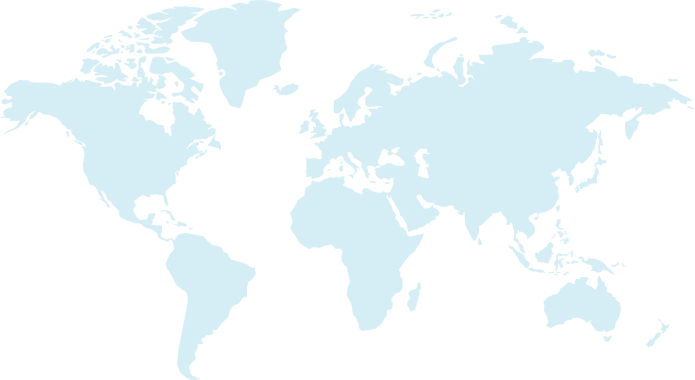
Regional Analysis
North America held the largest market share in 2025, supported by ageing
grid infrastructure, increasing investments in grid modernisation, and the
growing need for reliable electricity networks. The United States is driving
regional demand through utility digitalisation, advanced grid monitoring, and
the adoption of AI-based predictive maintenance to manage ageing equipment,
rising electricity demand, and extreme weather risks. Canada is witnessing
growing adoption of predictive maintenance technologies to monitor transmission
lines, transformers, and distribution networks across its extensive electricity
infrastructure, particularly in remote areas exposed to harsh weather
conditions. Mexico is also creating opportunities through power grid expansion,
infrastructure modernisation, and increasing demand for reliable electricity to
support industrial activities and urban development. These factors are
strengthening the adoption of advanced monitoring, fault detection, and
predictive analytics solutions across the region.
Asia-Pacific held a significant position in the Smart Grid Predictive
Maintenance Market in 2025 and is projected to grow at the fastest CAGR during
the forecast period, supported by expanding power infrastructure, increasing
electricity demand, and investments in grid modernisation. China is
strengthening its extensive transmission and distribution networks while
integrating renewable energy and advanced monitoring technologies. India is
expanding its power infrastructure, upgrading substations, and adopting smart
grid solutions to improve grid reliability and reduce equipment failures. Japan
is focusing on modernising ageing electricity infrastructure, improving
resilience against natural disasters, and implementing advanced
condition-monitoring systems. South Korea is advancing smart grid
digitalisation through intelligent power networks, automation, and the
integration of data analytics to improve asset performance. These developments,
combined with growing industrial electricity consumption and renewable energy
integration, are expected to accelerate demand for predictive maintenance
solutions across the region.
Countries
and Regions Covered
North America
(Dominating Region)
o United
States (Largest Country Market)
o Canada
o Mexico
Asia-Pacific (Fastest
Growing Region)
o China
(Largest Country Market)
o India
(Fastest-Growing Country Market)
o Japan
o South
Korea
o Rest
of Asia-Pacific
Europe
o Germany
(Largest Country Market)
o United
Kingdom
o France
o Italy
o Rest
of Europe
Latin America
o Brazil
(Largest Country Market)
o Chile
o Rest
of Latin America
Middle East &
Africa
o Saudi
Arabia (Largest Country Market)
o United
Arab Emirates
o Rest
of Middle East & Africa
Market Share
The Smart Grid Predictive Maintenance Market is consolidated, with major
electrical equipment, automation and software providers competing alongside
specialized grid monitoring and diagnostic companies. Companies such as
Siemens, GE Vernova, Schneider Electric, Hitachi Energy, Honeywell, Eaton and
Huawei hold strong positions through grid infrastructure, asset monitoring
technologies and utility relationships. IBM, Oracle and Emerson strengthen the
market through asset management software, analytics and predictive maintenance
capabilities, while Itron, S&C Electric, Schweitzer Engineering
Laboratories and Doble Engineering focus on grid reliability, equipment
diagnostics and condition monitoring. Key success factors include data
integration, predictive accuracy, cybersecurity, utility expertise and
compatibility with existing grid assets. Leading companies are expanding
AI-powered inspection, asset health monitoring, fault detection and digital
maintenance platforms to improve grid reliability and reduce unplanned outages.
Key
Players
·
Siemens AG (Germany)
·
GE Vernova Inc. (US)
·
Schneider Electric SE (France)
·
Hitachi Energy Ltd. (Switzerland)
·
Honeywell International Inc. (US)
·
Eaton Corporation plc (Ireland)
·
Huawei Technologies Co., Ltd. (China)
·
Emerson Electric Co. (US)
·
IBM Corporation (US)
·
Oracle Corporation (US)
·
Itron, Inc. (US)
·
S&C Electric Company (US)
·
Schweitzer Engineering Laboratories, Inc. (US)
·
Doble Engineering Company (US)
Recent
Market Developments
- July 2025: GE
Vernova agreed to acquire Alteia to strengthen AI-powered grid inspection and
damage detection capabilities, supporting predictive maintenance and improved
reliability in the Smart Grid Predictive Maintenance Market.
- October 2026: Itron
expanded its Advanced Grid Reliability solution with outage awareness and fault
prevention capabilities, helping utilities detect grid faults earlier, reduce
outages, and strengthen predictive maintenance in the Smart Grid Predictive
Maintenance Market.
Frequently Asked Questions
What is the Smart Grid Predictive Maintenance Market?
The Smart Grid Predictive Maintenance Market covers software, sensors and services that use data and analytics to forecast failures of grid assets such as transformers, substations and lines.
What is driving the Smart Grid Predictive Maintenance Market growth?
Growth is driven by ageing grid assets, rising power demand, the cost of outages and wider use of sensors, artificial intelligence and digital twins.
What is the size of the Smart Grid Predictive Maintenance Market?
The global Smart Grid Predictive Maintenance Market was valued at USD 9.75 billion in 2025 and is projected to reach USD 37.08 billion by 2034, growing at a CAGR of 16.0%.
Which region dominates the Smart Grid Predictive Maintenance Market?
North America dominates the market in 2025, while Asia-Pacific is the fastest-growing region.
Which asset type leads the market?
Transformers lead the market because they are costly, critical and widely fitted with monitoring systems.
Which technology is growing the fastest?
Digital twin technology is growing the fastest, supported by wider sensor coverage and lower cloud computing costs.
1
What is Smart Grid Predictive Maintenance?
2
What is the CAGR of the Smart Grid Predictive Maintenance Market?
3
Which asset type leads the Smart Grid Predictive Maintenance Market?
4
Which region has the highest market share?
5
Which technology is growing the fastest?
6
What are the latest trends in the Smart Grid Predictive Maintenance Market?
7
Who are the key players in the Smart Grid Predictive Maintenance Market?

Strong Industry Focus

Extensive Product Offerings

Customer Research Services

Robust Research Methodology

Comprehensive Reports

Latest Technological Developments

Value Chain Analysis

Potential Market Opportunities

Growth Dynamics

Quality Assurance

Post-sales Support

Regular Report Updates