Overview
The global Rapid Deployment Data Center Market was
valued at USD 35.0 billion in 2025 and is projected to reach USD 131.0 billion
by 2034, growing at a CAGR of 15.8% during the forecast period (2026–2034). The
market is driven by the need to add AI, cloud, and edge computing capacity
within months instead of years, the limited supply of skilled construction
labor near power-rich sites, and the growing preference for factory-tested
infrastructure that arrives with power, cooling, and racks already integrated. The
market is shifting from conventional, custom-built, room-by-room construction
toward standardized units that are ordered in fixed capacity blocks and
repeated across sites. Early modular products focused on small edge rooms and
air-cooled containers. Newer designs support multi-megawatt blocks with liquid
cooling and can be placed inside existing buildings or on open land next to
available power. Government initiatives such as the United States Executive
Order 14318, Accelerating Federal Permitting of Data Center Infrastructure,
signed on 23 July 2025, are easing federal regulatory burdens for large AI data
center projects and allow federally owned land to be used for their
development. The order applies to projects that need more than 100 MW of new
load and directs agencies to identify environmental review shortcuts for
qualifying projects. Faster approvals increase the value of equipment that
suppliers can build in factories while site work proceeds in parallel. By
Region, North America held the largest share of the market in 2025, supported
by hyperscale and colocation campus expansion in the United States and the
presence of leading modular infrastructure suppliers. Asia-Pacific is expected
to be the fastest-growing region during the forecast period, as China, India,
Japan, and South Korea add AI computing capacity and telecom operators roll out
prefabricated data centers across new sites.
Market Size & Share
| Study Period |
2021-2034 |
| Market Size in 2025 |
USD 35 Billion |
| Market Size in 2026 |
USD 40.5 Billion |
| Market Size by 2034 |
USD 131 Billion |
| Unit Value |
USD Billion |
| Projected CAGR |
15.8% (2026-2034) |
| Largest Region |
North America |
| Fastest-Growing Region |
Asia-Pacific |
| Fastest-Growing Type |
Containerized Data Centers |
Market Dynamics
KEY MARKET TREND
Shift Toward Liquid-Cooled, AI-Ready Prefabricated Modules
Emerging as a Transformational Trend
- Operators
are replacing room-by-room construction with factory-built pods that arrive
with power, cooling, and racks already integrated. Vendors test each unit
before shipment, so operators spend less time coordinating trades on site.
Buyers can also order the same design repeatedly, which turns data center
growth into a series of predictable capacity blocks.
- Liquid
cooling is becoming a standard option inside prefabricated modules as AI racks
outgrow air cooling. Hybrid designs let one enclosure support air-cooled
servers today and liquid-cooled GPU racks later, so operators avoid rebuilding
when workloads change. Suppliers are also aligning rack and power designs with
open standards such as Open Rack V3 to keep hardware choices flexible.
- Competition
is moving toward suppliers that can deliver power, cooling, and IT space under
one contract. Power equipment makers, cooling specialists, and server vendors
now sell complete modules, and several have formed partnerships or made
acquisitions to fill portfolio gaps. Single-contract delivery reduces interface
risk for buyers and rewards vendors that own their factories.
- Supermicro's
Data Center Building Block Solutions brochure, shows how vendors are packaging
this approach. It combines AI systems, in-rack and in-row liquid cooling, site
infrastructure, management software, and onsite services in one validated
offering. The in-row cooling range runs from 200 kW liquid-to-air sidecars to
1.8 MW coolant distribution units.
KEY MARKET DRIVER
Growing Demand for Faster Data Center Capacity Delivery is
the Key Driver
- AI
training and inference clusters need large blocks of powered and cooled floor
space, and buyers cannot wait years for conventional construction.
Factory-built units let operators order capacity in stages and bring racks
online within months. This shorter path to revenue makes rapid deployment
formats a practical choice for cloud, colocation, and enterprise buyers.
- Skilled
construction labor is limited in the regions where data center demand is
concentrated. Moving assembly and testing into factories shifts work from job
sites to controlled production lines, which reduces rework and weather delays.
Operators gain more predictable schedules and can plan capital spending in
smaller, repeatable steps that match customer demand.
- Sites
with spare grid capacity are often far from established data center hubs, so
buyers need equipment that can be shipped and installed almost anywhere.
Containerized and skid-mounted designs arrive complete and connect quickly to
utility or on-site power. This flexibility widens the choice of locations for
new capacity and shortens site preparation.
- The
International Energy Agency reported in April 2025 that global data center
electricity demand is set to more than double to around 945 TWh by 2030, with
AI as the largest driver. Data centers used about 415 TWh in 2024, roughly 1.5%
of world electricity. This growth path keeps pressure on operators to add
capacity faster.
KEY MARKET OPPORTUNITY
Expansion of Edge and Sovereign AI Capacity in Underserved
Regions Creates Significant Market Opportunity
- Sovereign
AI programs are pushing governments and national operators to host computing
capacity inside their own borders. Modular units suit these projects because
they can be placed on customer-owned land and expanded one block at a time.
Suppliers that offer local manufacturing, training, and maintenance support are
well placed to win these contracts.
- Smaller
cities and rural areas often lack local computing capacity for hospitals,
municipal services, and regional carriers. Compact pods that can be installed
within a few months offer a way to serve these locations without a large
building project. Vendors can bundle the pod with colocation and connectivity
services to create recurring service revenue.
- Mining,
energy, and defense operations need computing power where network links are
limited. Ruggedized containers with built-in power, cooling, and physical
security let these users run analytics and AI models on site. Suppliers that
add remote monitoring software and maintenance contracts can turn each unit
into a long-term service relationship.
- Duos
Edge AI announced a new edge data center in Abilene, Texas, built with Region
14 Education Service Center. The facility will serve more than 40 school
districts and charter schools across an 11-county area and operate as a
carrier-neutral colocation site. The project shows how modular pods can reach
underserved regions.

Rapid Deployment Data Center Market Size, 2025-2034 (USD Billion)
Segmentation Analysis
Analysis by Type
Prefabricated modular data centers held the largest
market share in 2025 because they suit the widest range of projects, from a few
hundred kilowatts at a branch site to multi-megawatt halls at colocation
campuses. Factory-built modules integrate structure, power distribution,
cooling, and cabling, so operators receive a tested unit that needs limited
on-site work. The format allows buyers to place modules inside existing
buildings or beside them, which matches how enterprises and colocation
providers add capacity in phases. Suppliers also design these modules to meet
Uptime Institute Tier requirements and open rack standards, which speeds
internal engineering approval and supports repeat orders for identical blocks.
Containerized data centers are projected to grow at the
fastest CAGR during the forecast period because ISO-sized shipping containers
can be built anywhere, moved by road, rail, or sea, and set up on a prepared
pad within weeks. Demand is rising from AI operators that need liquid-cooled
capacity at powered sites, telecom operators building edge nodes, and defense
and industrial users that need portable computing. Vendors now offer
multi-container blocks with separate compute, power, and cooling units, which
lets a single site scale from one megawatt to tens of megawatts. The standard
container footprint also simplifies transport planning and site preparation.
Type categories include
- Prefabricated
Modular Data Centers (Dominating Segment)
- Containerized
Data Centers (Highest CAGR Segment)
- Skid-Mounted
Data Centers
- Micro
Data Centers
- Others
Analysis by Component
Hardware held the largest market share in 2025 because
every rapid deployment unit is built around physical systems, including the
enclosure, power distribution, uninterruptible power supply, batteries, cooling
units, racks, cabling, and fire suppression. These items make up most of the
bill of materials and are purchased for each new module, whether the unit is
installed at a branch office or a hyperscale campus. Suppliers with their own
factories can control quality and lead times, which strengthens their position
with large buyers. Rising rack densities also raise the value of each unit, as
liquid cooling loops, higher-capacity busway, and stronger frames replace
lighter air-cooled designs.
Services are projected to grow at the fastest CAGR
during the forecast period because operators want a single partner that can
design, integrate, ship, commission, and maintain each unit. As modules become
more complex with liquid cooling and higher power density, buyers rely more on
vendor engineers for site assessment, commissioning tests, remote monitoring,
and lifecycle support. Vendors are also selling capacity on a contract basis,
including hosting and managed operations, which creates recurring revenue
instead of one-time equipment sales. Government agencies and enterprises
without in-house data center teams are active buyers of these bundled
offerings, since they need predictable schedules and clear accountability.
Component categories include
- Hardware
(Dominating Segment)
- Software
- Services
(Highest CAGR Segment)
Analysis by Deployment
Indoor deployment held the largest market share in 2025
because most buyers are enterprises, colocation providers, and telecom
operators that already own buildings with secure space, grid connections, and
fire protection. Placing prefabricated modules inside warehouses, existing data
halls, or purpose-built shells shields equipment from weather and eases
compliance with building and insurance requirements. Indoor units also connect
easily to existing chilled water and backup power systems, which shortens commissioning.
This makes the format a practical choice for capacity additions and for
replacing aging server rooms, especially where local permitting rules favor
projects that stay within an existing building footprint.
Outdoor deployment is projected to grow at the fastest
CAGR during the forecast period because AI capacity is increasingly built next
to available power, on open land, at substations, and at remote industrial
sites where no suitable building exists. Weatherproof containers and
skid-mounted units can be placed on a prepared pad and connected within weeks,
which avoids the cost and delay of constructing a shell. Suppliers are
improving enclosure ratings, thermal management for wide temperature ranges,
and physical security, which widens the range of climates and locations they
can serve. Defense, mining, energy, and rural edge projects add further demand
for outdoor units.
Deployment categories include
- Indoor
Deployment (Dominating Segment)
- Outdoor
Deployment (Highest CAGR Segment)
Analysis by Application
Capacity expansion held the largest market share in 2025
because colocation providers, cloud operators, and enterprises use rapid
deployment units to add capacity in steps that follow customer demand. Each
module can be ordered, built, and installed while civil works continue
elsewhere, which lets operators start earning revenue sooner than with a full
building project. Repeating the same design across sites also simplifies
procurement, spare parts, and staff training. Operators that face full data
halls or delayed building permits find modular blocks a fast way to meet
contracted commitments without funding a full campus build in one phase.
Artificial intelligence compute is projected to grow at
the fastest CAGR during the forecast period because GPU clusters need
high-density racks, liquid cooling, and heavy power feeds that many existing
facilities cannot support. Prefabricated units that integrate liquid cooling,
busway, and high-density racks let operators start AI clusters without
redesigning a whole building. Suppliers now offer modules sized for
multi-megawatt AI blocks and validated with server and GPU makers, which
reduces integration risk. Cloud providers, neocloud operators, and national
compute programs are all placing orders for such units, and many want to
install them near low-cost power.
Application categories include
- Capacity
Expansion (Dominating Segment)
- Artificial
Intelligence Compute (Highest CAGR Segment)
- Edge
Computing
- Disaster
Recovery
- Remote
Site Operations
Analysis by End User
Colocation providers held the largest market share in
2025 because they add capacity continuously for many tenants and need
repeatable designs that can be built quickly. Prefabricated modules let a
provider commission a data hall in phases, match investment to signed customer
contracts, and keep the same design across markets. Many providers also use
modular units to serve edge locations and smaller cities where a full campus
would not be viable. Their large and regular orders give suppliers a reason to
reserve factory capacity, and this steady relationship has made colocation the
largest buyer group.
Hyperscale cloud providers are projected to grow at the
fastest CAGR during the forecast period because their AI infrastructure plans
require large amounts of new capacity in short timeframes. These operators
value factory-built power and cooling blocks that can be produced in parallel
across several sites and installed with limited local labor. Their scale allows
them to standardize designs with suppliers and place multi-year orders, which
improves production efficiency. Growing demand for training and inference
capacity, along with the need to place computing closer to users for latency
and data residency reasons, is pushing hyperscalers toward more prefabricated
and containerized units.
End User categories include
- Colocation
Providers (Dominating Segment)
- Hyperscale
Cloud Providers (Highest CAGR Segment)
- Enterprises
- Telecom
Operators
- Government
Agencies
By Region
Rapid Deployment Data Center Market Share 2025, (CAGR)
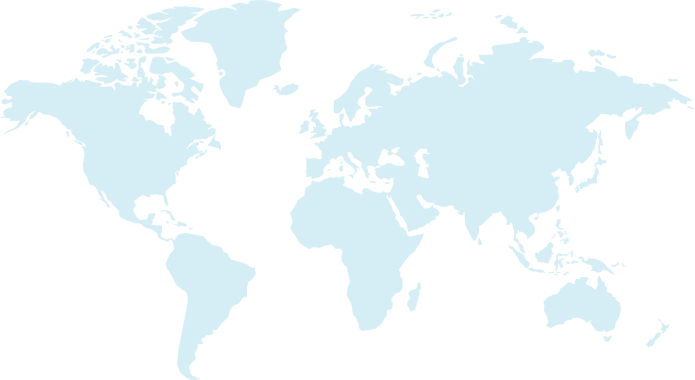
North America held the largest market share in 2025,
accounting for 38% of the global market. The United States leads the region
because hyperscale, colocation, and AI operators are building new campuses and
need equipment that can be delivered quickly, while Canada and Mexico add
demand from cloud, telecom, and industrial users. Regional suppliers including
Vertiv, Eaton, HPE, and Supermicro, along with startups such as Armada and
Flexnode, have expanded modular product lines and factory capacity. Federal and
state permitting reviews and utility interconnection queues strongly influence
site choice, so buyers favor units that can be paired with on-site or
behind-the-meter power. Liquid-cooled modules for AI are the most active area
of technology adoption, and competition centers on delivery speed and
single-contract supply.
Asia-Pacific is projected to grow at the fastest CAGR
during the forecast period, rising from a 28% share of the market in 2025.
China leads the region, where Huawei, Inspur, and Kehua offer prefabricated and
containerized data centers, and national programs such as East Data, West
Computing direct computing capacity toward regions with abundant energy. Delta
Electronics in Taiwan is introducing prefabricated AI modular designs, while
India, Japan, and South Korea are adding capacity for cloud, AI, and telecom
workloads. Buyers in the region are adopting liquid-cooled containers and
prefabricated halls to shorten build times, and local manufacturing keeps
prices competitive. Competition is intense, with domestic vendors and global
suppliers pursuing telecom, cloud, and government projects.
Countries and Regions Covered
North
America (Dominating Region)
- United
States (Largest Country Market)
- Canada
- Mexico
Asia-Pacific
(Fastest Growing Region)
- China
(Largest Country Market)
- India
(Fastest-Growing Country Market)
- Japan
- South
Korea
- Rest
of Asia-Pacific
Europe
- Germany
(Largest Country Market)
- France
- United
Kingdom
- Italy
- Rest
of Europe
Latin
America
- Brazil
(Largest Country Market)
- Chile
(Fastest-Growing Country Market)
- Rest
of Latin America
Middle
East & Africa
- Saudi
Arabia (Largest Country Market)
- United
Arab Emirates (Fastest-Growing Country Market)
- Rest
of Middle East & Africa
Market Share
The Rapid Deployment Data Center Market is moderately
consolidated. Large infrastructure suppliers such as Schneider Electric,
Vertiv, Huawei, Eaton, and Delta Electronics hold strong positions because they
build power, cooling, and enclosure systems in their own factories and back
them with global service networks. Server and IT makers, including HPE and
Supermicro, compete by bundling compute with liquid-cooled modules, while
specialist builders such as Armada, Flexnode, and Duos focus on edge, sovereign,
and remote deployments. Key success factors include factory capacity, liquid
cooling expertise, delivery speed, and the ability to certify designs to Uptime
Institute Tier levels. Leading companies are prioritizing multi-megawatt blocks
for AI, single-contract delivery of power, cooling, and IT, and partnerships
with startups and specialist builders. Recent acquisitions and investments in modular
manufacturing capacity show that suppliers expect demand to keep rising.
Key Players
- Schneider
Electric SE (France)
- Vertiv
Holdings Co (US)
- Huawei
Technologies Co., Ltd. (China)
- Eaton
Corporation plc (Ireland)
- Delta
Electronics, Inc. (Taiwan)
- Johnson
Controls International plc (Ireland)
- Hewlett
Packard Enterprise Company (US)
- Rittal
GmbH & Co. KG (Germany)
- STULZ
GmbH (Germany)
- Inspur
Group Co., Ltd. (China)
- Kehua
Data Co., Ltd. (China)
- Super
Micro Computer, Inc. (US)
- Armada
Holdings, Inc. (US)
- Flexnode
(US)
- Duos
Technologies Group, Inc. (US)
Recent Market Developments
- In
August 2025, Vertiv announced global availability
of Vertiv OneCore, a prefabricated solution that combines power, thermal, and
IT infrastructure for AI, HPC, and high-density data centers of 5 MW and above.
Electrical and mechanical modules are built in parallel, which compresses
project timelines and gives enterprise, colocation, sovereign, and neocloud
buyers a single supplier for the full build.
- In
January 2026, Eaton announced a collaboration with
Flexnode to deliver prefabricated IT infrastructure for data halls of 3.5 to 35
MW, with Eaton supplying backup power, racks, and cable management for
Flexnode's NX Compute Module. Eaton also led Flexnode's Series A round, which
links a large power supplier with a modular builder and widens the choice of
turnkey AI factory options in the United States.
- In
May 2026, Armada signed a Global Framework
Agreement with Johnson Controls for modular data center systems and announced
Galleon Forge One, a planned factory of up to 400,000 square feet in Arizona.
Production is planned to start with Leviathan units, which adds domestic
manufacturing capacity for sovereign and multi-tenant AI deployments and pairs
a startup with a global thermal management supplier.
- In
June 2026, Delta Electronics unveiled a
prefabricated AI modular data center at COMPUTEX 2026 that integrates power,
liquid cooling, and IT infrastructure in one design. Delta says the system cuts
IT build time by about 60%, which positions the company as a supplier of
complete AI-ready modules for buyers that want faster deployment.
Frequently Asked Questions
What is the Rapid Deployment Data Center Market?
The Rapid Deployment Data Center Market covers factory-built, pre-integrated data center units, such as prefabricated modular, containerized, skid-mounted, and micro data centers, that combine IT racks, power, cooling, and monitoring and can be commissioned within weeks or months.
What is driving the Rapid Deployment Data Center Market growth?
Market growth is driven by demand for AI and cloud capacity that conventional construction cannot deliver fast enough, limited on-site construction labor, the spread of liquid-cooled high-density racks, and the need for computing capacity at edge and remote sites.
What is the size of the Rapid Deployment Data Center Market?
The global Rapid Deployment Data Center Market was valued at USD 35.0 billion in 2025 and is projected to reach USD 131.0 billion by 2034, growing at a CAGR of 15.8%.
Which region dominates the Rapid Deployment Data Center Market?
North America dominates the market with a 38% share in 2025, supported by hyperscale and colocation expansion in the United States, while Asia-Pacific is the fastest-growing region as China, India, Japan, and South Korea add AI and telecom capacity.
Which type is growing the fastest in Rapid Deployment Data Centers?
Containerized data centers are the fastest-growing type, as ISO-sized units can be built anywhere and installed on a prepared pad within weeks.
What are the main end users of Rapid Deployment Data Centers?
Major end users include colocation providers, hyperscale cloud providers, enterprises, telecom operators, and government agencies.
Why is Executive Order 14318 significant for this market?
The United States Executive Order 14318, signed on 23 July 2025, aims to speed federal permitting for large AI data center projects and allows the use of federal land, which favors equipment that can be manufactured in parallel with site work.
1
What is a Rapid Deployment Data Center?
2
What is the CAGR of the Rapid Deployment Data Center Market?
3
Which type leads the Rapid Deployment Data Center Market?
4
Which end user dominates the Rapid Deployment Data Center Market?
5
Which component has the highest market share?
6
What are the latest trends in the Rapid Deployment Data Center Market?
7
Who are the end users of Rapid Deployment Data Centers?

Strong Industry Focus

Extensive Product Offerings

Customer Research Services

Robust Research Methodology

Comprehensive Reports

Latest Technological Developments

Value Chain Analysis

Potential Market Opportunities

Growth Dynamics

Quality Assurance

Post-sales Support

Regular Report Updates