Overview
The global M2M Connectivity Management Solutions Market was valued at USD 10.63 billion in 2025 and is
projected to reach USD 40.74 billion
by 2034, growing at a CAGR of 16.1% during the forecast period (2026–2034). The
market is driven by the growing adoption of IoT devices, connected assets, and
real-time data communication across industries.
The market is shifting from fixed SIM cards tied to one carrier to
programmable eSIM connectivity that devices can switch remotely. The GSMA
SGP.32 standard for IoT eSIMs is now reaching commercial launch, and providers
are adding single control planes that manage several operators at once.
Platforms are also adding artificial intelligence agents for project support
and diagnostics.
Government and regulatory action on legacy networks is creating
replacement demand. The United Kingdom published a voluntary 2G switch-off
charter in March 2026, and its operators plan to begin switching off 2G from
2029. Ofcom advises device suppliers to upgrade 2G-only devices to at least 4G
and to plan migration with customers. Several other countries have set 2G and
3G closure dates in 2026, including Japan for 3G and China for 3G. These
deadlines force owners of installed devices to change SIMs, modules and
connectivity contracts, which raises demand for management tools. By region, North
America held the largest market share in 2025, and Asia-Pacific is expected to
be the fastest-growing region during the forecast period.
Market Size & Share
| Study Period: |
2021-2034 |
| Market Size in 2025: |
USD 10.63 Billion |
| Market Size in 2026: |
USD 12.34 Billion |
| Market Size by 2034: |
USD 40.74 Billion |
| Unit Value: |
USD Billion |
| Projected CAGR: |
16.1% (2026-2034) |
| Largest Region: |
North America |
| Fastest-Growing Region: |
Asia-Pacific |
| Fastest-Growing Component: |
Services |
Market Dynamics
KEY MARKET TREND:
Programmable
eSIM Connectivity Based on SGP.32 Emerging as a Transformational Trend in M2M
Connectivity Management
- Devices can now
download and switch network profiles over the air, so manufacturers ship one
hardware version worldwide and choose carriers after installation.
- Management platforms
are moving to a single control plane that oversees several operators, with
automatic failover when one network is weak or unavailable.
- Artificial intelligence
assistants are being added to connectivity platforms to help set up projects,
find faults and optimise data plans.
- Telenor IoT announced
that SGP.32 SIM cards would be commercially available for delivery from April
2026, letting devices request, download and switch connectivity profiles
remotely.
KEY MARKET DRIVER
Growth in
Cellular IoT Devices and Legacy Network Shutdowns Driving Demand for
Connectivity Management
- Enterprises deploy
connected machines in many countries, and each country brings different
carriers, roaming rules and prices, which makes central management necessary.
- Security teams want
control over which networks and data paths devices use, and connectivity
platforms add firewalls, usage limits and alerts for unusual behaviour.
- Data costs are a large
recurring expense for device owners, so tools that pool data plans and spot
waste give a quick return.
- According to GSA, 303
completed, planned or ongoing 2G and 3G network switch-offs across 88 countries
and territories are driving the need for M2M connectivity management solutions
to support device migration, maintain connectivity, and ensure seamless
transitions to newer network technologies.
KEY MARKET OPPORTUNITY
Automotive
Connectivity, Satellite Backup and Managed Services for Smaller Enterprises
Creating Significant Opportunity
- Automakers need to
manage connectivity across the whole vehicle life and across countries, which
opens demand for carrier-independent platforms.
- Satellite and cellular
combined in one management layer can serve remote assets such as pipelines,
farms and ships that terrestrial networks do not cover.
- Small and mid-sized
companies without telecom teams can buy managed connectivity as a service with
simple pricing and one bill.
- According to the
International Telecommunication Union (ITU), direct-to-device satellite
networks could extend connectivity to the 4% of the global population that
remains unconnected, creating opportunities for the M2M Connectivity Management
Solutions Market through satellite-enabled connectivity management for vehicles,
fleets, and remote industrial assets.
M2M Connectivity Management Solutions Market Size, 2025-2034 (USD Billion)
Segmentation Analysis
Analysis by Component
Platforms held the largest market share in 2025, supported by the growing
need for centralized connectivity management, automated SIM and eSIM
activation, profile control, usage monitoring, and billing across multiple
mobile networks. These platforms enable businesses to manage connected devices
through a unified interface, simplify network operations, improve visibility
into connectivity performance, and reduce the complexity of managing
large-scale deployments. Their ability to support device onboarding, connectivity
provisioning, remote configuration, usage tracking, troubleshooting, and
lifecycle management makes them essential throughout the deployment process.
Services are projected to grow at the fastest CAGR during the forecast
period, driven by the increasing need for specialized expertise as enterprises
expand their connected device deployments. Businesses require assistance with
network planning, carrier selection, device certification, legacy network
migration, system integration, and ongoing technical support to ensure reliable
connectivity across diverse environments. The growing complexity of managing
multiple networks, devices, and connectivity technologies encourages
organizations to rely on external service providers rather than develop and maintain
in-house capabilities.
Component categories include
·
Platforms (Dominating Segment)
·
Services (Highest CAGR Segment)
Analysis by Connectivity Technology
Cellular held the largest market share in 2025, supported by the
widespread use of mobile networks for connecting vehicles, smart meters, asset
trackers, payment terminals, and industrial equipment across diverse locations.
Cellular technologies provide broad network coverage, mobility, roaming
capabilities, and access to multiple network operators, making them suitable
for managing connected devices across different industries. The adoption of
technologies such as 4G, LTE-M, NB-IoT, and 5G increases the need for
centralized SIM and eSIM activation, connectivity provisioning, data usage
monitoring, roaming management, and network performance monitoring.
Satellite is projected to grow at the fastest CAGR during the forecast
period, driven by the increasing need for reliable connectivity in remote and
underserved locations beyond the reach of terrestrial mobile networks.
Industries such as mining, agriculture, oil and gas, maritime transportation,
and railways require continuous communication with equipment and assets
operating across geographically dispersed areas. Satellite connectivity can
complement cellular networks by extending coverage to locations where
conventional mobile infrastructure is limited or unavailable.
Connectivity Technology
categories include
·
Cellular (Dominating Segment)
·
LPWAN
·
Satellite (Highest CAGR Segment)
·
Wi-Fi and Short-Range
·
Others
Analysis by Deployment Mode
Cloud deployment held the largest market share in 2025, supported by its
scalability, flexibility, and cost efficiency in managing large volumes of
connected devices across multiple regions. Cloud-based platforms enable
businesses to activate and monitor connections, manage SIM and eSIM profiles,
track data usage, and oversee connectivity through centralized interfaces
without investing heavily in physical infrastructure. Automatic software
updates, remote accessibility, rapid deployment, and integration with
enterprise applications further simplify connectivity management and reduce
operational complexity.
Hybrid deployment is projected to grow at the fastest CAGR during the
forecast period, supported by the increasing need to balance cloud scalability
with greater control over sensitive data, security, and critical network
operations. Enterprises in telecommunications, automotive, utilities, and
industrial sectors often require cloud-based tools for centralized monitoring,
analytics, and device management while retaining selected data, security
functions, and essential workloads within private or locally controlled
environments.
Deployment Mode categories
include
·
Cloud (Dominating Segment)
·
On-Premises
·
Hybrid (Highest CAGR Segment)
Analysis by Organization Size
Large enterprises held the largest market share in 2025, supported by
their extensive connected device networks, multi-country operations, and
complex connectivity management requirements. Businesses across automotive,
manufacturing, utilities, logistics, and transportation require centralized
platforms to monitor connections, manage SIM and eSIM profiles, control data
usage, and maintain reliable communication across multiple carriers and
geographical regions. Their large-scale deployments often involve demanding
security requirements, integration with existing enterprise systems, continuous
technical support, and consistent service performance.
Small and medium enterprises are projected to grow at the fastest CAGR
during the forecast period, driven by the increasing availability of flexible,
affordable, and easy-to-deploy connectivity management solutions. Programmable
eSIM technology enables businesses to simplify carrier selection, remotely
provision connectivity, and support device deployments across different markets
without relying on separate hardware configurations for each region.
Cloud-based platforms, application programming interfaces, and automated
connectivity management tools further reduce the technical expertise required
to deploy and maintain connected devices.
Organization Size categories
include
·
Large Enterprises (Dominating Segment)
·
Small and Medium Enterprises (Highest CAGR
Segment)
By Region
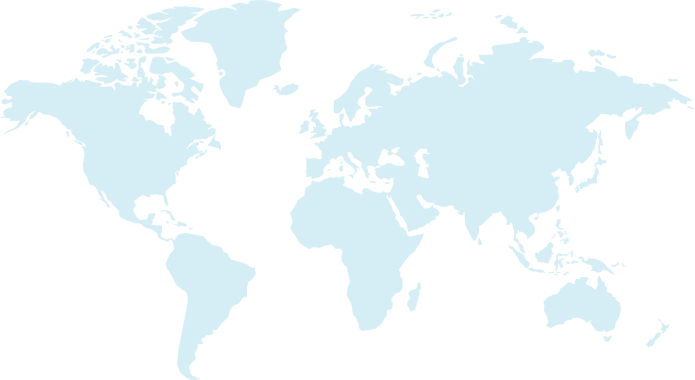
M2M Connectivity Management Solutions Market Regional Analysis
M2M Connectivity Management Solutions Market Share 2025, (CAGR)
Regional Analysis
North America held the largest market share in 2025, supported by its
advanced telecommunications infrastructure, strong IoT ecosystem, and
widespread adoption of connected technologies. The United States leads regional
demand through its established mobile network operators, connected vehicle
industry, smart metering deployments, and extensive use of IoT solutions across
logistics, manufacturing, and utilities. Canada contributes through the
adoption of connected infrastructure, industrial automation, remote asset
monitoring, and digital solutions for its energy, transportation, and natural
resource sectors. Mexico is experiencing growing opportunities through
automotive manufacturing, industrial modernization, logistics, and the
expansion of connected operations across supply chains. Across the region,
businesses increasingly require centralized platforms to manage SIM and eSIM
profiles, monitor device connectivity, control network usage, and maintain
reliable communication across multiple carriers. These developments, combined
with continued investment in connectivity solutions and growing demand from
enterprises operating across borders, support North America's leading position
in the M2M Connectivity Management Solutions Market.
Asia-Pacific held the second-largest market share in 2025 and is expected
to grow at the fastest CAGR during the forecast period, driven by expanding
manufacturing, electronics, automotive, and industrial automation industries.
China’s large manufacturing base and growing adoption of connected factories,
smart vehicles, and industrial IoT solutions are driving demand for
connectivity management. India’s expanding automotive sector, digital
infrastructure, logistics networks, and industrial modernization are creating
opportunities for connected device management across multiple industries.
Japan’s advanced automotive and electronics industries, together with its focus
on factory automation, robotics, and connected infrastructure, support demand
for reliable M2M connectivity solutions. South Korea’s strong semiconductor,
electronics, automotive, and telecommunications industries are encouraging the
deployment of connected devices and smart manufacturing technologies.
Furthermore, the transition away from legacy mobile networks across the region
is prompting businesses to upgrade devices and connectivity modules, increasing
the need for SIM management, network migration, and uninterrupted connectivity.
These developments are expected to strengthen demand for M2M connectivity
management solutions across Asia-Pacific.
Countries
and Regions Covered
North America
(Dominating Region)
o United
States (Largest Country Market)
o Canada
o Mexico
Asia-Pacific
(Fastest Growing Region)
o China
(Largest Country Market)
o India
(Fastest-Growing Country Market)
o Japan
o South
Korea
o Rest
of Asia-Pacific
Europe
o Germany
(Largest Country Market)
o United
Kingdom
o France
o Italy
o Rest
of Europe
Latin America
o Brazil
(Largest Country Market)
o Argentina
o Rest
of Latin America
Middle East &
Africa
o Saudi
Arabia (Largest Country Market)
o United
Arab Emirates
o Rest
of Middle East & Africa
Market Share
The M2M Connectivity Management Solutions Market is fragmented, with
telecommunications operators, specialist IoT connectivity providers and
connectivity platform companies competing for the same customers. Companies
such as Cisco, Vodafone, Telefónica, Deutsche Telekom, AT&T, Verizon,
Aeris, KORE, Telit Cinterion, Soracom, Wireless Logic, Eseye, emnify, Telenor
IoT and Semtech compete through global network coverage, connectivity
management platforms and established enterprise relationships. Key success factors
include multi-carrier connectivity, eSIM support, platform usability, security,
customer support and cost per connection. Leading companies are expanding
managed IoT connectivity services, introducing advanced eSIM solutions,
strengthening connectivity management platforms, forming network partnerships
and acquiring regional providers to broaden coverage and enhance service
capabilities.
Key
Players
·
Cisco Systems, Inc. (US)
·
Vodafone Group Plc (UK)
·
Telefónica, S.A. (Spain)
·
Deutsche Telekom AG (Germany)
·
AT&T Inc. (US)
·
Verizon Communications Inc. (US)
·
Aeris Communications, Inc. (US)
·
KORE Group Holdings, Inc. (US)
·
Telit Cinterion (US)
·
Soracom, Inc. (Japan)
·
Wireless Logic Group (UK)
·
Eseye Limited (UK)
·
emnify GmbH (Germany)
·
Telenor IoT (Sweden)
·
Semtech Corporation (US)
Recent
Market Developments
- July 2025: KORE
partnered with TD SYNNEX to expand the distribution of its OmniSIM connectivity
plans, improving access to managed IoT connectivity solutions and supporting
growth in the M2M Connectivity Management Solutions Market.
- August 2025: Wireless
Logic acquired Zipit Wireless to strengthen its North American presence and
expand its multi-carrier IoT connectivity and billing capabilities, supporting
growth in the M2M Connectivity Management Solutions Market.
Frequently Asked Questions
What is the M2M Connectivity Management Solutions Market?
The M2M Connectivity Management Solutions Market covers the platforms and services that provision, control and monitor the network connections of machines and devices, including SIM and eSIM management.
What is driving the M2M Connectivity Management Solutions Market growth?
Growth is driven by rising numbers of cellular-connected machines, the shutdown of 2G and 3G networks, the shift to programmable eSIM and the need to manage many carriers from one platform.
What is the size of the M2M Connectivity Management Solutions Market?
The global M2M Connectivity Management Solutions Market was valued at USD 10.63 billion in 2025 and is projected to reach USD 40.74 billion by 2034, growing at a CAGR of 16.1%.
Which region dominates the M2M Connectivity Management Solutions Market?
North America dominates the market in 2025, while Asia-Pacific is the fastest-growing region.
North America dominates the market in 2025, while Asia-Pacific is the fastest-growing region.
Platforms lead the market because they are the core software for activating, monitoring and billing connections.
Which connectivity technology is growing the fastest?
Satellite is growing the fastest, as it is combined with cellular plans to cover remote assets.
1
What is M2M Connectivity Management?
2
What is the CAGR of the M2M Connectivity Management Solutions Market?
3
Which component leads the M2M Connectivity Management Solutions Market?
4
Which region has the highest market share?
5
Which connectivity technology is growing the fastest?
6
What are the latest trends in the M2M Connectivity Management Solutions Market?
7
Who are the key players in the M2M Connectivity Management Solutions Market?

Strong Industry Focus

Extensive Product Offerings

Customer Research Services

Robust Research Methodology

Comprehensive Reports

Latest Technological Developments

Value Chain Analysis

Potential Market Opportunities

Growth Dynamics

Quality Assurance

Post-sales Support

Regular Report Updates