Overview
The global Cotton Seed Market was valued at USD 5.0
billion in 2025 and is projected to reach USD 8.2 billion by 2034, growing at a
CAGR of 5.6% during the forecast period (2026–2034). The market growth is driven
by steady global cotton mill demand, rising adoption of insect-resistant and
herbicide-tolerant traits, higher seed replacement among smallholder farmers,
and continued breeding for yield, fibre quality, and machine-harvest
suitability. The Cotton Seed Market covers commercially produced cotton
planting seed, including hybrids and open-pollinated varieties, in both
genetically modified (GM) and conventional form, sold to growers for crop
production. Seed is produced through breeding, multiplication, ginning, delinting
(acid or mechanical), conditioning, and increasingly, seed treatment and
coating before sale. The market is shifting from single-trait, high-volume
hybrid seed toward stacked-trait, climate-resilient, and machine-harvest-ready
varieties. Government initiatives such as India's Mission for Cotton
Productivity, approved by the Union Cabinet in May 2026 with an outlay of Rs
5,659.22 crore for 2026-27 to 2030-31, are encouraging development of
high-yielding, climate-resilient, and pest-resistant cotton seed, including
Extra-Long Staple varieties, across 140 districts in 14 states. By region,
Asia-Pacific held the largest share of the market in 2025, at 52%, supported by
large cotton areas in India, China, and Pakistan, high Bt hybrid adoption, and
government-backed seed programs. Latin America is expected to be the
fastest-growing region during the forecast period, driven by Brazil's large
mechanized cotton belt, expanding irrigated area, and strong export
orientation.
Market Size & Share
| Study Period |
2021-2034 |
| Market Size in 2025 |
USD 5.0 Billion |
| Market Size in 2026 |
USD 5.3 Billion |
| Market Size by 2034 |
USD 8.2 Billion |
| Unit Value |
USD Billion |
| Projected CAGR |
5.6% (2026-2034) |
| Largest Region |
Asia-Pacific |
| Fastest-Growing Region |
Latin America |
| Fastest-Growing Trait Type |
Stacked Trait Cotton Seed |
Market Dynamics
KEY MARKET TREND
Shift Toward Stacked-Trait, Climate-Resilient, and
Machine-Harvest-Ready Varieties Emerging as a Transformational Trend
- Seed
developers are moving from single-trait products to stacked packages that
combine multi-gene insect control, broad herbicide tolerance, and built-in
tolerance to nematodes and bacterial blight, helping growers reduce spray
passes and input costs.
- Breeding
programs are increasingly built around mechanization and fibre quality.
Early-maturing, high-density, and machine-harvest varieties are being
prioritized in Xinjiang, Brazil, Australia, and the US Cotton Belt, supported
by field-testing networks run by growers, universities, and public research
bodies such as CSIRO and Fundacao MT.
- Competition
is shifting toward trait access and licensing. Large global players protect
leadership through proprietary traits and brand portfolios, while regional
companies in India, China, and Brazil compete on local adaptation, price, and
farmer reach. Over the long term, trait-led differentiation and value-added
seed treatments are expected to raise average seed value per hectare.
- BASF
added three new Stoneville cotton varieties for the 2026 season, all carrying
the Axant Flex quad-stacked herbicide trait and the TwinLink Plus three-gene
insect control trait.
KEY MARKET DRIVER
Rising Cotton Mill Demand and Government-Backed
Productivity Programs Are the Key Drivers of Market Growth
- Cotton
mill use is recovering globally, which keeps demand for certified,
high-performing planting seed firm. Growers facing tight margins prefer seed
that protects yield and lowers pest-control and labour costs.
- Rising
seed replacement in smallholder economies, where farmers move from saved seed
to certified hybrids, is expanding the formal market. Digital advisory tools,
farmer demonstrations, and better seed-quality testing are speeding up this
shift.
- Persistent
pest and weed pressure, including pink bollworm, sucking pests, and
herbicide-resistant weeds, is pushing growers toward newer trait platforms.
Regulators and extension agencies in India, Brazil, and the US support
stewardship and resistance-management practices, such as refuge planting, that
protect the long-term value of seed technology.
- India's
Union Cabinet approved the Mission for Cotton Productivity with an outlay of Rs
5,659.22 crore for 2026-27 to 2030-31, aiming to lift lint yield from 440 to
755 kg per hectare and covering 140 districts across 14 states in the first
phase, with a focus on high-yielding, climate-resilient, and pest-resistant
seed.
KEY MARKET
OPPORTUNITY:
Growth of Extra-Long Staple Cotton and Seed Exports
to Emerging Cotton Regions Creates Significant Market Opportunity
- Extra-Long
Staple (ELS) cotton remains underdeveloped in several large markets. Countries
that depend on imported premium fibre, such as India, are promoting domestic
ELS breeding, creating room for new varieties, contract-farming models, and
traceability-linked seed programs.
- Emerging
cotton regions in Central Asia and Africa are adopting improved varieties and
mechanized practices. Seed suppliers that offer adapted varieties, technical
services, and local multiplication partnerships can reach new customers beyond
mature markets.
- Value-added
seed, including treated and coated seed, biological seed treatments, and
gene-edited traits where approved, offers higher margins per hectare. Digital
agronomy services bundled with seed can build grower loyalty and recurring
revenue.
- Xinjiang-based
seed company Hilltide reported that its cotton seed exports to Central Asia
rose from 800 tonnes in the late 2024 to early 2025 season to 1,500 tonnes in
the late 2025 to early 2026 season, serving Uzbekistan, Kazakhstan,
Turkmenistan, and Kyrgyzstan.

Cotton Seed Market Size, 2025-2034 (USD Billion)
Segmentation Analysis
Analysis by Trait
Type
Insect-resistant (Bt) cotton seed held the largest
market share in 2025 because Bt hybrids cover the vast majority of cotton area
in India, the world's largest cotton-growing country by area, and are widely
grown in China, Pakistan, the United States, Brazil, and Australia. Their
adoption is supported by reduced losses from major insect pests, lower
dependence on insecticide applications, and more stable yields under high pest
pressure. Continued breeding of Bt hybrids with improved yield, fiber quality,
and resistance traits is also supporting segment demand.
Stacked trait cotton seed is projected to grow at the
fastest CAGR during the forecast period, driven by demand for products that
combine multi-gene insect control with herbicide tolerance and protection
against pests such as plant bugs and thrips. In the United States, Bollgard 3
ThryvOn with XtendFlex and BASF's Axant Flex with TwinLink Plus show that
stacks are becoming standard for new launches.
Trait Type categories include
- Insect-Resistant
(Bt) Cotton Seed (Dominating Segment)
- Stacked
Trait Cotton Seed (Highest CAGR Segment)
- Herbicide-Tolerant
Cotton Seed
- Conventional
(Non-GM) Cotton Seed
- Others
Analysis by Cotton
Species
Upland cotton held the largest market share in 2025
because it supplies the bulk of the world's cotton fibre and is the base for
almost all commercial hybrids and GM traits. Its wide adaptation, high yield
potential, and suitability for mechanical harvesting make it the first choice
of breeders in India, China, the United States, Brazil, and Australia.
Established trait licensing and approval pathways for Upland varieties further
strengthen the segment's lead.
Extra-Long Staple (ELS) cotton is projected to grow at
the fastest CAGR during the forecast period, driven by premium textile demand
and policy attention. India's Mission for Cotton Productivity specifically
promotes ELS varieties to reduce import dependence, and traceability under the
Kasturi Cotton Bharat initiative aims to position Indian cotton as a premium
product. Growers in the United States and Egypt also continue to invest in
long-staple varieties, supporting new variety launches and higher seed value
per hectare.
Cotton Species categories include
- Upland
Cotton (Dominating Segment)
- Extra-Long
Staple Cotton (Highest CAGR Segment)
- Asiatic
(Desi)
- Others
Analysis by Seed
Processing Type
Delinted seed held the largest market share in 2025
because delinting, done with acid or mechanical methods, removes the short
fibres on the seed coat and allows uniform flow through precision planters,
better germination, and easier treatment. Most commercial planting seed sold in
the United States, India, Brazil, and Australia is delinted, graded, and packed
before sale, so the segment benefits directly from rising demand for certified
seed.
Treated and coated seed is projected to grow at the
fastest CAGR during the forecast period as growers seek early-season protection
against seedling diseases, thrips, and nematodes. Trait platforms are
increasingly paired with seed treatments; for example, ThryvOn seed is sold
with an imidacloprid seed treatment, and Australian trials are testing
silica-based seed treatments to improve moisture uptake and establishment.
Seed Processing Type categories include
- Delinted
Seed (Dominating Segment)
- Treated
& Coated Seed (Highest CAGR Segment)
- Non-Delinted
Seed
- Others
Analysis by
Application
Cotton fibre production held the largest market share in
2025 because nearly all planting seed is bought to grow the fibre crop, with
oil and feed as co-products. USDA projects world cotton mill use at about 122
million bales in 2026/27, the highest since 2017/18, which supports steady seed
purchases. Government programs such as India's Mission for Cotton Productivity,
which targets higher lint yield and quality, reinforce the focus on
fibre-oriented seed development.
Animal feed is projected to grow at the fastest CAGR
during the forecast period, supported by rising use of whole cottonseed and
cottonseed meal in dairy and livestock rations as a source of energy, fibre,
and protein. Large crops generate substantial cottonseed volumes; for example,
Cotton Australia expected close to 1.1 million tonnes of cottonseed from the
2025/26 crop. Breeders are also working on lower-gossypol and higher-protein
lines, which could widen feed use over time.
Application categories include
- Cotton
Fibre Production (Dominating Segment)
- Animal
Feed (Highest CAGR Segment)
- Edible
Oil Extraction
- Others
By Region
Cotton Seed Market Share 2025, (CAGR)
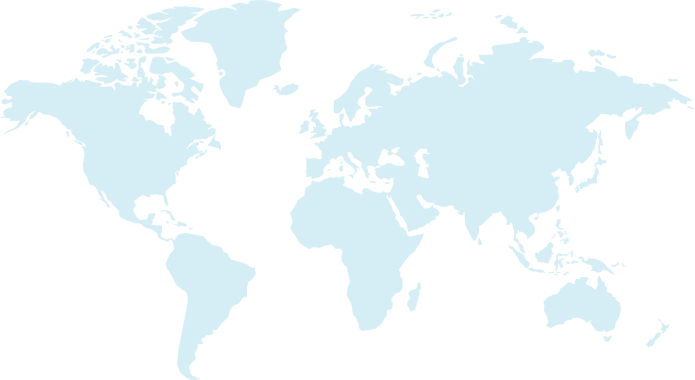
Asia-Pacific held the largest market share in 2025,
accounting for 52% of the global market share, supported by the world's largest
cotton areas in India, China, and Pakistan and high adoption of Bt hybrids.
India held the largest country market, supported by its extensive cotton
acreage, widespread adoption of Bt hybrids, and strong domestic seed demand.
India's seed market is shaped by regulated Bt seed pricing, GEAC trait
approvals, and the Mission for Cotton Productivity, with roughly 95% of cotton
area under Bt. China is another major market, with the Xinjiang region
producing about 5.69 million tonnes of cotton in 2024, around 92% of national output,
while mechanization above 97% sustains demand for early-maturing and
machine-harvest varieties. Japan and South Korea represent smaller but
technologically advanced markets, with demand supported by specialty cotton
applications, seed quality, and modern agricultural practices. Rest of
Asia-Pacific contributes to demand through large cultivation areas, high-yield
farming, and continued adoption of improved varieties.
Latin America is projected to grow at the fastest CAGR
during the forecast period, supported by Brazil's large, mechanized,
export-oriented cotton sector. Brazil held the largest country market, with
about 2.1 million hectares planted with cotton, while USDA's early 2026/27
outlook places the country as the leading exporter. Mato Grosso and Bahia
account for nearly 70% of national output, and irrigated area in Bahia
continues to grow. Variety development is led by Brazilian breeders such as
TMG, which works with grower-backed research bodies such as Fundacao MT and has
been reported to hold about 43% of the national cotton seed market. Chile
represents a smaller regional market, with demand supported by specialty and
high-value agricultural applications and modern seed technologies. Rest of
Latin America, including Argentina, Peru, Colombia, and other markets, adds
demand through expanding cotton cultivation, improved seed adoption, and
regional breeding activity.
Countries and Regions Covered
Asia-Pacific (Dominating Region)
- India
(Largest Country Market)
- China
- Japan
- South
Korea
- Rest
of Asia-Pacific
North America
- United
States (Largest Country Market)
- Mexico
- Canada
Europe
- United
Kingdom (Largest Country Market)
- Germany
- France
- Italy
- Rest
of Europe
Latin America (Fastest Growing Region)
- Brazil
(Largest Country Market)
- Chile
- Rest
of Latin America
Middle East & Africa
- U.A.E.
- Saudi
Arabia
- Rest
of Middle East & Africa
Market Share
The
market is consolidated at the global level. Key players include Bayer AG, Vylor
Inc., BASF SE, Nuziveedu Seeds Limited, Rasi Seeds (P) Ltd, Mahyco –
Maharashtra Hybrid Seeds Company Pvt. Ltd., Kaveri Seed Company Limited,
Tropical Melhoramento & Genetica (TMG), Ankur Seeds Pvt. Ltd., Cotton Seed
Distributors Ltd, Americot, Inc., Ajeet Seeds Private Limited, Krishidhan Seeds
Private Limited, Xinjiang Hongtai Seed Industry Technology Co., Ltd., and
Xinjiang Jinmian Seed Industry Science & Technology Co., Ltd. In North
America, a few companies, including Bayer, BASF, Vylor (formerly Corteva's seed
business), and Americot, control major trait and variety portfolios, while in
Brazil a small group of breeders leads the market. In India, dozens of
sublicensed seed companies compete on Bt hybrids, which keeps the market fragmented.
Key success factors include proprietary trait access, breeding depth, regional
adaptation, seed quality assurance, and distribution reach. Leading companies
are prioritizing stacked-trait launches, nematode and disease tolerance,
treated seed, and digital agronomy tools.
Key Players
- Bayer
AG (Germany)
- Vylor
Inc. (United States)
- BASF SE
(Germany)
- Nuziveedu
Seeds Limited (India)
- Rasi
Seeds (P) Ltd (India)
- Mahyco
– Maharashtra Hybrid Seeds Company Pvt. Ltd. (India)
- Kaveri
Seed Company Limited (India)
- Tropical
Melhoramento & Genetica – TMG (Brazil)
- Ankur
Seeds Pvt. Ltd. (India)
- Cotton
Seed Distributors Ltd (Australia)
- Americot,
Inc. (United States)
- Ajeet
Seeds Private Limited (India)
- Krishidhan
Seeds Private Limited (India)
- Xinjiang
Hongtai Seed Industry Technology Co., Ltd. (China)
- Xinjiang
Jinmian Seed Industry Science & Technology Co., Ltd. (China)
Recent Market
Developments
- August
2025: India's Ministry of Agriculture informed the
Lok Sabha that a proposal for environmental release of Bollgard II Roundup
Ready Flex (HTBt) cotton was under consideration by the Genetic Engineering
Appraisal Committee, keeping the next regulatory step for herbicide-tolerant Bt
cotton in focus for seed companies.
- January
2026: Industry reporting confirmed 13 new cotton
varieties for the 2026 US season, including five Deltapine varieties from
Bayer, four of which carry Bollgard 3 ThryvOn with XtendFlex technology, which
protects against tarnished plant bugs and thrips.
- September
2026: TMG presented new cotton cultivars and
technologies at the 15th Brazilian Cotton Congress (CBA), highlighting products
developed through its breeding, biotechnology, and digital-agriculture
programs. The company said the launches were designed to address major grower
needs in Brazil.
- October
2026: Corteva completed the separation of its seed
business into Vylor Inc., an independent publicly traded company listed on the
NYSE under the symbol VYLR, creating a standalone seed and genetics company
that includes Corteva's cotton seed activities.
Frequently Asked Questions
What is the Cotton Seed Market?
The Cotton Seed Market covers commercially produced cotton planting seed, including Bt, stacked-trait, and conventional hybrids and varieties, sold to growers for fibre, oil, and feed value chains.
What is driving the Cotton Seed Market growth?
Growth is driven by recovering cotton mill demand, adoption of stacked traits, higher seed replacement, and government programs such as India
What is the size of the Cotton Seed Market?
The global Cotton Seed Market was valued at USD 5.0 billion in 2025 and is projected to reach USD 8.2 billion by 2034, growing at a CAGR of 5.6%.
Which region dominates the Cotton Seed Market?
Asia-Pacific dominates the market with a 52% share in 2025, supported by India, China, and Pakistan, while Latin America is the fastest-growing region due to Brazil
Which trait type is growing the fastest in Cotton Seed?
Stacked trait cotton seed is the fastest-growing trait type, driven by combined insect control and herbicide tolerance packages.
What are the main applications of Cotton Seed?
The main applications are cotton fibre production, animal feed, and edible oil extraction.
The Rs 5,659.22 crore mission (2026-27 to 2030-31) promotes high-yielding, climate-resilient, and pest-resistant seed and Extra-Long Staple cotton, supporting demand for improved seed.
2
What is the CAGR of the Cotton Seed Market?
3
Which trait type leads the Cotton Seed Market?
4
Which application dominates the Cotton Seed Market?
5
Which cotton species has the highest market share?
6
What are the latest trends in the Cotton Seed Market?
7
Who are the end users of Cotton Seed?

Strong Industry Focus

Extensive Product Offerings

Customer Research Services

Robust Research Methodology

Comprehensive Reports

Latest Technological Developments

Value Chain Analysis

Potential Market Opportunities

Growth Dynamics

Quality Assurance

Post-sales Support

Regular Report Updates