Overview
The AI Data Center Cooling Optimization
Market was valued at an estimated USD 1.44 billion in 2025 and is projected to
reach approximately USD 12.38 billion by 2034, growing at a CAGR of 27.0%
during the forecast period (2026-2034). The market growth is driven by the
explosive rise of AI training and inference workloads, the resulting surge in
rack power density, and growing recognition among data center operators that
software-driven, autonomous cooling control can deliver substantial energy
savings beyond what static, rule-based building management systems can achieve. The market is shifting from conventional,
reactive cooling management to AI-driven predictive thermal optimization. Government
initiatives such as the U.S. Department of Energy’s COOLERCHIPS 1.5 program
support advanced, water-free cooling systems for AI data centers, while India’s
Energy Conservation and Sustainable Building Code promotes energy and water
efficiency in data centers. By region, North America held the largest share of
the market in 2025, reflecting the concentration of hyperscale AI data center
construction and the early commercial presence of leading AI cooling
optimization vendors in the United States specifically. Asia-Pacific is
projected to be the fastest-growing region during the forecast period,
consistent with the region's rapid build-out of new AI-ready data center
capacity.
Market Size & Share
| Study Period |
2021-2034 |
| Market Size in 2025 |
USD 1.44 Billion |
| Market Size in 2026 |
USD 1.83 Billion |
| Market Size by 2034 |
USD 12.38 Billion |
| Unit Value |
USD Billion |
| Projected CAGR |
27.0% (2026-2034) |
| Largest Region |
North America |
| Fastest-Growing Region |
Asia-Pacific |
| Largest Application |
Liquid Cooling Optimization |
Market Dynamics
KEY MARKET TREND
Feed-Forward Predictive Control,
Facility-Wide AI Agent Orchestration and Digital Twin Modeling Emerging as
Trends
- Feed-forward control approaches, which use
rack-power measurements to anticipate heat generation and adjust coolant
distribution before temperatures actually rise, are emerging as a technically
distinct advance over conventional feedback-based control, directly addressing
the lag between rapidly changing AI workloads and cooling system response
times.
- Vendors are increasingly expanding their AI
agents beyond cooling optimization alone into broader facility management,
including electrical distribution, battery dispatch, and AI workload
scheduling, reflecting growing recognition that these systems must be
orchestrated together.
- Physics-aware digital modeling of individual
facilities, built from a comprehensive mapping of each site's specific sensor
and equipment layout, is becoming a standard deployment prerequisite, enabling
AI control systems to be tailored precisely to each data center's unique
thermal and electrical characteristics.
- Digital twin and predictive-control
technologies are gaining traction, with recent studies demonstrating 9.4%–27.8%
cooling-energy savings through predictive optimization and real-time modeling.
KEY MARKET DRIVER
Explosive AI Workload Growth and Proven
Energy Savings Are the Key Drivers
- The explosive rise of AI training and inference
workloads continues to drive rack power densities to levels that make static,
rule-based cooling control increasingly inadequate, directly reinforcing demand
for AI-driven dynamic optimization.
- Cooling's position as roughly 30% of total data
center energy consumption, second only to compute itself, makes it a uniquely
high-value target for AI-driven efficiency improvements relative to other
facility subsystems.
- Credible, publicly disclosed energy savings
results, including a major hyperscaler's reported 40% reduction in cooling
costs through AI implementation, continue to reinforce operator confidence that
AI-driven cooling optimization delivers real, measurable returns rather than
speculative efficiency claims.
- The IEA estimates that global data-center
electricity consumption will rise from 415 TWh in 2024 to around 945 TWh by
2030, driven mainly by AI workloads, while Google has demonstrated up to 40%
cooling-energy savings through AI-based optimization.
KEY MARKET OPPORTUNITY
Facility-Wide AI Orchestration,
Liquid-Cooling-Specific Control and International Expansion Create Opportunity
- Expansion from cooling-specific optimization into
comprehensive facility management, spanning electrical distribution, battery
dispatch, and AI workload scheduling, represents a substantial opportunity for
vendors capable of becoming the unified control layer across an entire data
center's infrastructure.
- Growing deployment of liquid cooling
specifically, which requires more responsive, higher-precision control than
conventional air cooling given AI workloads' rapid and large thermal swings,
represents an opportunity for vendors capable of developing liquid-cooling-specific
AI control capability.
- International expansion into higher energy-cost
regions outside the vendor's home market represents a significant opportunity,
given that regions with higher electricity prices generate proportionally
larger financial returns from AI-driven cooling energy savings.
- Government initiatives such as the
U.S. Department of Energy’s COOLERCHIPS 1.5 program are supporting advanced,
water-free cooling systems for AI data centers, while the European Commission’s
2026 data-center energy-efficiency framework promotes energy and water
performance monitoring, creating opportunities for optimized cooling solutions
across international markets.

AI Data Center Cooling Optimization Market Size, 2025–2034 (USD Billion)
Segmentation Analysis
Analysis by Offering
AI Control Software held the largest
market share in 2025, reflecting the core AI agent and control algorithm layer
that forms the primary value driver within any cooling optimization deployment.
It enables real-time monitoring, predictive control and automated adjustment of
cooling systems based on workload and thermal conditions. Its ability to
integrate with existing data center infrastructure also supports wider adoption
across different cooling configurations.
Professional Services are projected to
grow at the fastest CAGR during the forecast period, as the facility-specific
mapping, physics-aware digital modeling, and integration work required for each
deployment scales alongside broader market adoption; this designation is
analyst judgment. These services help operators assess existing cooling
infrastructure, identify optimization opportunities and configure AI control
systems according to facility-specific thermal and operational conditions. They
also support the integration of software with cooling equipment, sensors,
building management systems and data-center management platforms.
Offering categories include
- AI Control Software (Dominating Segment)
- Professional Services (Highest CAGR Segment)
- Monitoring & Analytics
Analysis by Deployment
Supervisory Layer deployment held the
largest market share in 2025, in which AI control software connects on top of
an existing building management or SCADA system rather than replacing it, is
estimated to hold the largest market share, reflecting this approach's lower
barrier to adoption for operators with substantial existing cooling
infrastructure investment. This deployment model allows facilities to introduce
AI-based optimization without making major changes to existing control
architecture or cooling equipment.
Embedded Controls are projected to grow
at the fastest CAGR during the forecast period, as new-build AI data centers
increasingly specify AI-native control systems from the outset rather than
retrofitting supervisory software onto conventional controls; this designation
is analyst judgment. These systems can be integrated directly into cooling
equipment, sensors and facility control architectures during the design stage,
enabling faster data exchange and more coordinated control. They also support
real-time response to changing computational loads and thermal conditions
across AI-optimized facilities.
Deployment categories include
- Supervisory Layer on Existing SCADA (Dominating
Segment)
- Embedded Controls (Highest CAGR Segment)
Analysis by Application
Liquid Cooling Optimization held the
largest market share in 2025, reflecting liquid cooling's rapidly growing share
of new AI data center capacity and its greater need for responsive,
high-precision control relative to conventional air cooling. These systems can
continuously adjust cooling parameters based on real-time workload and thermal
conditions, improving energy efficiency while maintaining required operating
temperatures. Rising deployment of direct-to-chip and other liquid cooling architectures
in high-density AI facilities is therefore expected to support demand for
specialized optimization solutions.
Thermal Risk & Capacity Management is
projected to grow at the fastest CAGR during the forecast period, as operators
increasingly prioritize predictive, feed-forward approaches capable of
preventing heat-related incidents before they occur rather than reacting to
them after temperatures rise; this designation is analyst judgment. Increasing
rack densities, dynamic AI workloads and greater adoption of liquid cooling are
expected to further increase the need for continuous thermal risk monitoring
and capacity planning. This designation reflects analyst judgment.
Application categories include
- Liquid Cooling Optimization (Dominating Segment)
- Thermal Risk & Capacity Management (Highest
CAGR Segment)
- Air Cooling Optimization
Analysis by End-User
Hyperscale data centers held the largest
market share in 2025, consistent with hyperscale’s early adoption of AI-driven
cooling optimization and their outsized share of overall AI data center
capacity under construction. AI-based cooling optimization can help hyperscale
operators coordinate cooling equipment, monitor thermal conditions and adjust
energy use across large campuses. High investment capacity and the need to
improve efficiency across expanding infrastructure further support adoption in
this segment.
Colocation facilities are projected to
grow at the fastest CAGR during the forecast period, as AI cooling optimization
vendors extend their customer base beyond hyperscale operators into
shared-infrastructure facilities serving AI workloads for a broader range of
tenants; this designation is analyst judgment. AI-driven optimization can help
coordinate cooling resources, improve energy efficiency and maintain thermal
conditions as tenant workloads fluctuate. Growing demand for AI infrastructure
from enterprises, cloud providers and other organizations is also expanding the
need for advanced cooling management across colocation environments. This
designation reflects analyst judgment.
End-User categories include
- Hyperscale (Dominating Segment)
- Colocation (Highest CAGR Segment)
- Enterprise
By Region
AI Data Center Cooling Optimization Market Share 2025
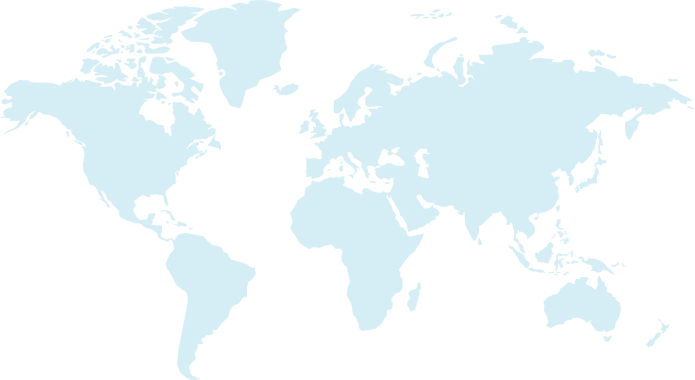
North America held the largest market share in
2025, reflecting the concentration of hyperscale AI data center construction in
the United States, along with the early commercial presence of leading AI
cooling optimization vendors headquartered there. The United States represents
the primary demand center, supported by large-scale hyperscale deployments and
investment in AI-ready data center infrastructure, while Canada is expanding
data center capacity and adopting advanced cooling technologies for
high-density computing. Mexico is also developing its data center
infrastructure and provides an emerging market for AI-focused cooling
optimization solutions. No publisher reviewed for this RD provided any
quantified regional breakdown for this specific category; this regional
allocation is an analyst-modeled estimate based on known AI data center
construction concentration patterns rather than a category-specific source.
Asia-Pacific is projected to grow at the fastest
CAGR during the forecast period, consistent with the region's rapid build-out
of new AI-ready data center capacity. China is expanding domestic AI computing
infrastructure at scale, while India is increasing data center capacity to
support cloud, digital services and AI workloads. Japan continues to invest in
advanced data center infrastructure, and South Korea is expanding AI computing
capacity supported by its strong semiconductor and technology ecosystem. The
Rest of Asia Pacific is also contributing through new capacity development
across emerging digital markets. The region is reported elsewhere in the
broader data center infrastructure research reviewed for this RD to be adding
several gigawatts of new capacity through the remainder of the decade, though
this designation should be treated as directional given the complete absence of
category-specific regional data.
Regions Covered
North America (Dominating Region)
- United States
- Canada
- Mexico
Europe
- Germany
- United Kingdom
- France
- Italy
- Rest of Europe
Asia Pacific (Fastest Growing Region)
- China
- India
- Japan
- South Korea
- Rest of Asia Pacific
Latin America
- Brazil
- Chile
- Rest of Latin America
Middle East & Africa
- Saudi Arabia
- U.A.E.
- Rest of Middle East & Africa
Market Share
The market is fragmented led by a small group of
specialist AI control vendors alongside AI-adjacent capabilities embedded
within larger industrial and technology companies' broader offerings. Phaidra,
a Seattle-based company founded by alumni of Alphabet's DeepMind research
division, is a leading specialist, building AI agents that coordinate cooling,
power, and workload management as a unified system; the company's
liquid-cooling agent has been deployed and tested in production alongside a
major cloud provider's liquid-cooled fleet. Vigilent specializes specifically
in data center cooling optimization software and services, while EkkoSense provides
AI-driven operational visibility, cooling capacity optimization, and thermal
and power risk mitigation. Schneider Electric, Vertiv, Siemens, Johnson
Controls, nVent Electric, NVIDIA, Hewlett Packard Enterprise, Eaton, Rittal,
Carrier Global, Trane Technologies, and Submer Technologies strengthen the
competitive landscape through AI-enabled controls, facility management
platforms, liquid-cooling systems, thermal management technologies, intelligent
infrastructure, and data center optimization solutions. Alphabet, through its
DeepMind research division, pioneered much of the foundational AI approach to
data center cooling optimization through its own internal deployments,
informing the broader industry's confidence in the technology's potential.
Competitive intensity is elevated around proven, production-validated energy
savings and thermal risk reduction results specifically, given the category's
reliance on credible, disclosed performance outcomes to build operator trust in
autonomous control systems.
Key Players
- Phaidra, Inc. (United States)
- Vigilent Corporation (United States)
- EkkoSense Ltd. (United Kingdom)
- Schneider Electric SE (France)
- Vertiv Holdings Co. (United States)
- Siemens AG (Germany)
- Johnson Controls International plc (Ireland)
- nVent Electric plc (United Kingdom)
- NVIDIA Corporation (United States)
- Hewlett Packard Enterprise Company (United
States)
- Eaton Corporation plc (Ireland)
- Rittal GmbH & Co. KG (Germany)
- Carrier Global Corporation (United States)
- Trane Technologies plc (Ireland)
- Submer Technologies S.L. (Spain)
Recent Market Developments
- July 2025: Activate Capital made a strategic investment in XNRGY Climate Systems to
expand its United States manufacturing capacity and accelerate next-generation
air handling and liquid-cooling solutions for hyperscale, modular, and edge
data centers.
- January 2026: Motivair by Schneider Electric
launched the MCDU-70, a 2.5 MW coolant distribution unit designed for
high-density AI data centers, with systems scalable to 10 MW+ for
next-generation AI and accelerated computing workloads.
- March 2026: Eaton completed its acquisition
of Boyd Thermal, strengthening its liquid-cooling capabilities and enabling
integrated grid-to-chip cooling solutions for AI-driven data centers.
- April 2026: Vertiv acquired Strategic Thermal
Labs to strengthen liquid-cooling and thermal-management capabilities for
high-density AI data centers, improving cold-plate design, server-side cooling,
and thermal validation.
Frequently Asked Questions
What is the AI Data Center Cooling Optimization Market?
The market covers software and AI agent-based systems that sit above conventional building management or SCADA systems, dynamically controlling how liquid and air cooling infrastructure operates, distinct from the cooling hardware market itself.
What is driving the AI Data Center Cooling Optimization Market growth?
Growth is driven by explosive AI workload growth, rapidly rising rack power densities that exceed the capability of static cooling control, and credible, publicly disclosed energy savings results that have built operator confidence in the technology.
What is the size of the AI Data Center Cooling Optimization Market?
This RD estimates the market at USD 1.44 billion in 2025, projected to reach USD 12.38 billion by 2034 at a 27.0% CAGR. No publisher identified for this RD sizes this exact category; every figure is an order-of-magnitude, analyst-derived estimate with no direct or indirect publisher percentage to anchor on, and should be treated as illustrative only. See Notes for Review.
Which region dominates the AI Data Center Cooling Optimization Market?
North America is estimated to dominate, reflecting the concentration of hyperscale AI data center construction and the early commercial presence of leading vendors in the United States, while Asia-Pacific is estimated as the fastest-growing region.
How much of data center energy use does cooling represent?
Cooling typically accounts for approximately 30% of total data center energy consumption, ranking second only to the power required for data processing itself, making it a high-value target for AI-driven optimization.
What energy savings has AI cooling optimization demonstrated?
Google has publicly reported that implementing advanced AI across its own data centers reduced cooling bills by approximately 40%, while specialist vendor Phaidra has reported cooling energy reductions of approximately 25% and, in 2026 production testing, 75 to 80% lower thermal overshoot compared to conventional controls.
Who are the leading vendors in this market?
Phaidra, Vigilent, and EkkoSense are leading AI-native specialist vendors, while larger industrial and technology companies including Schneider Electric, Vertiv, Siemens, and IBM embed AI-driven cooling monitoring and optimization capability within broader facility management and infrastructure platforms.
1
What does AI Data Center Cooling Optimization cover?
2
What is the CAGR of the AI Data Center Cooling Optimization Market?
3
Which offering leads the AI Data Center Cooling Optimization Market?
4
Which region dominates the AI Data Center Cooling Optimization Market?
5
Which application has the highest growth potential?
6
What are the latest trends in AI-driven cooling optimization?
7
Who are the leading AI data center cooling optimization vendors?

Strong Industry Focus

Extensive Product Offerings

Customer Research Services

Robust Research Methodology

Comprehensive Reports

Latest Technological Developments

Value Chain Analysis

Potential Market Opportunities

Growth Dynamics

Quality Assurance

Post-sales Support

Regular Report Updates